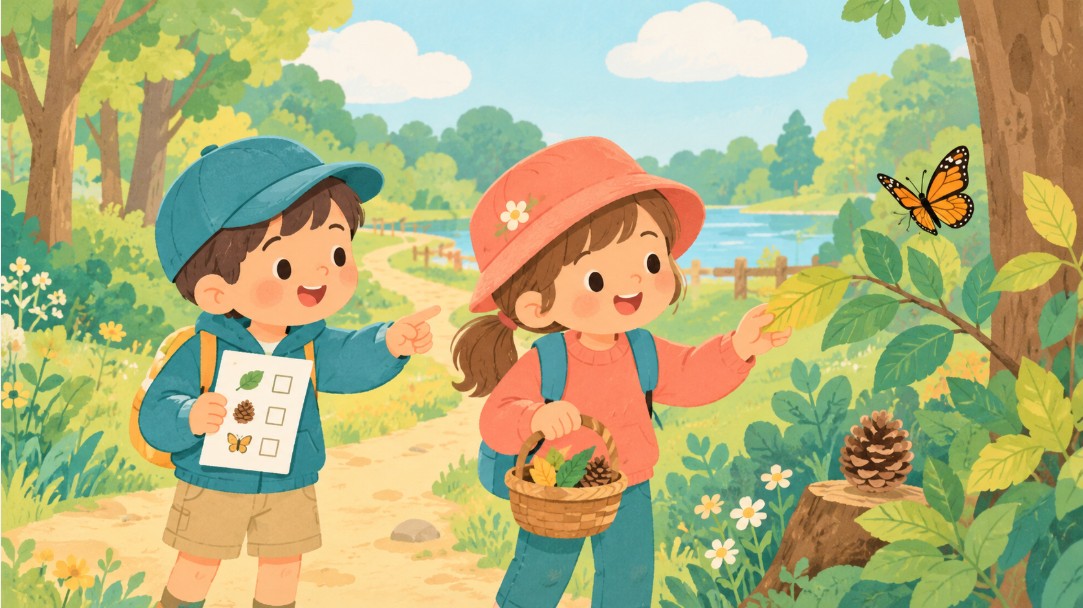
Looking for more outdoor fun? Check out our outdoor scavenger hunt ideas for kids and our easy STEM activities for kids.
A walk around the block doesn’t have to be boring for kids — a little structure turns it into an adventure. Below are 12 fun nature walk activities for kids, organized by type, plus a free printable nature walk checklist to bring along. These nature walk activities for kids work on any trail, in any park, or even just around your own neighborhood.
Why Nature Walk Activities for Kids Matter
Getting outside is one of the simplest things a family can do together, and the benefits go well beyond fresh air. According to HealthyChildren.org (American Academy of Pediatrics), “playing outside is good for children, physically and mentally.” That’s exactly why nature walk activities for kids are worth building into a regular routine, not just saving for a special hike.
What You’ll Need
- A printed copy of the free nature walk checklist below
- A pencil or crayon to check off items
- A small bag or basket for collecting
- Comfortable walking shoes and weather-appropriate clothing
- A magnifying glass (optional, for closer looks at bugs and textures)
- Crayons and paper for rubbings
- A camera or phone for photos of favorite finds
1. Observation Activities
These nature walk activities for kids are all about slowing down and noticing what’s already there.
- Scavenger Hunt Checklist Walk — Use the printable checklist to search for a pinecone, a feather, and a red leaf along the trail.
- Cloud Shape Spotting — Pause partway through the walk to look up and name what shapes the clouds resemble.
- Bird & Bug Watching — Stand quietly for a minute to spot birds or insects, then try to name what you saw.
2. Collecting & Crafting Activities
These nature walk activities for kids turn found treasures into something to keep.
- Nature Collage Collecting — Gather leaves, twigs, and petals along the way to glue into a collage once you’re home.
- Leaf & Bark Rubbings — Press paper against a leaf or a tree trunk and rub gently with a crayon to reveal the texture underneath.
- Rock Painting Walk — Collect a few smooth rocks on the trail and set them aside to paint later.
3. Games & Challenges
Turn the walk into friendly competition with these nature walk activities for kids.
- Color Scavenger Hunt — Try to spot something of every color of the rainbow before the walk ends.
- Nature Walk Bingo — Turn the checklist items into a bingo card and race to get five in a row.
- I Spy, Nature Edition — Take turns giving a color or shape clue for something nearby and guessing what it is.
4. Sensory & Science Activities
These last three round out the list at 12 total nature walk activities for kids, focused on using every sense along the trail.
- Texture Hunt — Find something rough, something smooth, something prickly, and something soft.
- Sound Mapping — Stop, close your eyes, and count how many different sounds you can hear in one minute.
- Nature Smell Walk — Smell pine needles, flowers, or fresh-cut grass and describe each scent out loud.
Free Printable: Nature Walk Checklist
Grab our free printable checklist to track each nature walk activity for kids as your family tries it.
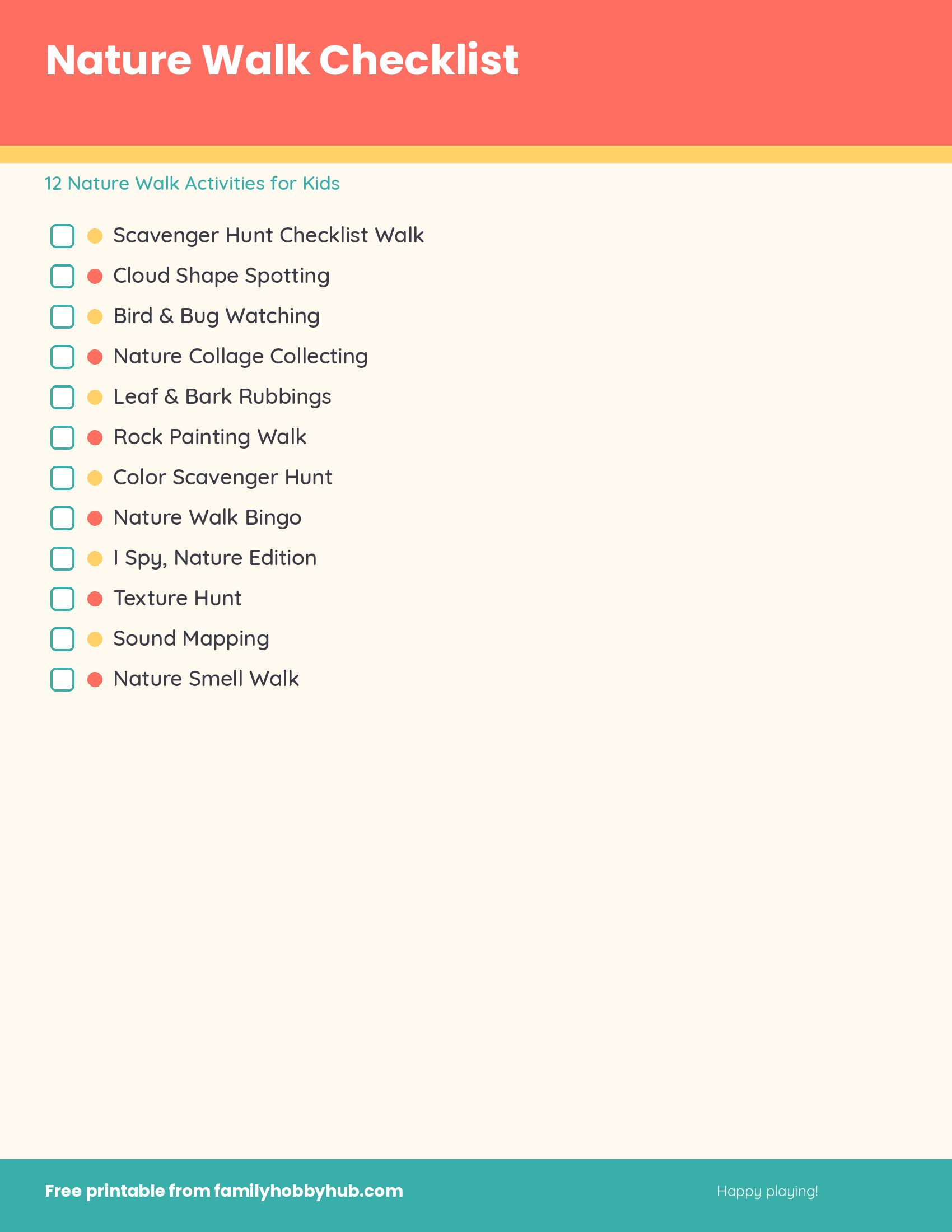
Download the free Nature Walk Checklist (PDF)
Tips for Nature Walk Activities with Kids
- Let the pace be slow — the point of nature walk activities for kids is noticing, not covering distance.
- Bring a small bag so collected treasures don’t end up loose in pockets.
- Check local trail rules before collecting rocks, leaves, or plants, since some parks ask visitors to leave nature as they found it.
- Keep the checklist short enough to finish in one walk so kids feel a sense of completion.
Nature Walk Activities for Kids by Age
Toddlers do best with simple sensory activities like the Texture Hunt or Nature Smell Walk. Preschoolers are ready for the Scavenger Hunt Checklist Walk and Color Scavenger Hunt. Elementary-age kids can take on Nature Walk Bingo, Sound Mapping, and leading younger siblings through Bird & Bug Watching.
Turning Nature Walk Activities for Kids into a Weekly Habit
Pick one regular time each week — a Saturday morning or an after-dinner stroll — and bring a fresh checklist each time. Many families find that nature walk activities for kids become a favorite screen-free reset, especially after a long week indoors.
Common Mistakes with Nature Walk Activities for Kids
The most common mistake is planning too long a route for a young child’s attention span — a short walk with lots of stops beats a long walk with none. Another common mistake is rushing past interesting finds instead of letting nature walk activities for kids unfold at a child’s own curious pace.
Nature Walk Activities for Kids on a Budget
You don’t need special gear for any of these ideas — a pencil, a bag, and a sidewalk or park nearby are enough. These budget-friendly nature walk activities for kids prove that a great outdoor afternoon doesn’t require a paid attraction.
Nature Walk Activities for Kids for Siblings of Different Ages
Pair an older sibling with a younger one for Nature Walk Bingo, letting the older child read the clues aloud while the younger one points and searches. During the Nature Collage Collecting activity, an older sibling can help sort and identify finds while a toddler simply enjoys gathering — the same nature walk activities for kids, adjusted to each child’s skill level.
How to Store Supplies for Nature Walk Activities for Kids
Keep a small “nature walk bag” by the door with a pencil, blank checklists, and a collecting bag already inside. Having nature walk activities for kids supplies ready to grab means a spontaneous walk is never held up by searching for gear.
Nature Walk Activities for Kids Without a Trail Nearby
No trail or park close by? Most of these nature walk activities for kids work just as well on a neighborhood sidewalk, in a backyard, or around a school playground — clouds, bugs, colors, and textures show up almost anywhere outside.
Frequently Asked Questions
What age can kids start nature walk activities?
Even toddlers can enjoy simple sensory-based nature walk activities for kids, like the Texture Hunt or Nature Smell Walk. More structured challenges, like bingo or scavenger hunts, tend to work best starting around age 4.
Do I need to live near a park or trail?
No. Sidewalks, backyards, and school playgrounds all offer enough clouds, bugs, plants, and textures for most of these activities.
How long should a nature walk be for young kids?
Aim for 15-20 minutes with plenty of stops rather than a longer walk with a fast pace — the stops are where most of the learning and fun happens.
What if my child wants to collect everything they find?
Set a simple limit ahead of time, like “one thing per checklist item,” and check local rules first, since some parks ask visitors not to remove natural items.
Final Thoughts
Nature walk activities for kids turn an ordinary walk into a small daily adventure, and the free printable checklist makes it easy to start today. Try one of these 12 nature walk activities for kids this week and see which one your family wants to repeat.

About the Author: Family Hobby Hub
The Family Hobby Hub team researches and puts together simple, screen-free activity ideas for parents, grandparents, and caregivers — indoor play and sensory activities, backyard and outdoor games, on-the-go entertainment for car rides and waiting rooms, and easy learning and STEM activities for kids of different ages. Every guide is built around things most families already have around the house, takes only a few minutes to set up, and comes with a free printable checklist or activity sheet whenever possible. We are not child development specialists, educators, or licensed childcare professionals, and our activity ideas are general suggestions for family fun rather than professional guidance. Always supervise children during any activity and use your own judgment about what is appropriate for your child's age, interests, and abilities.