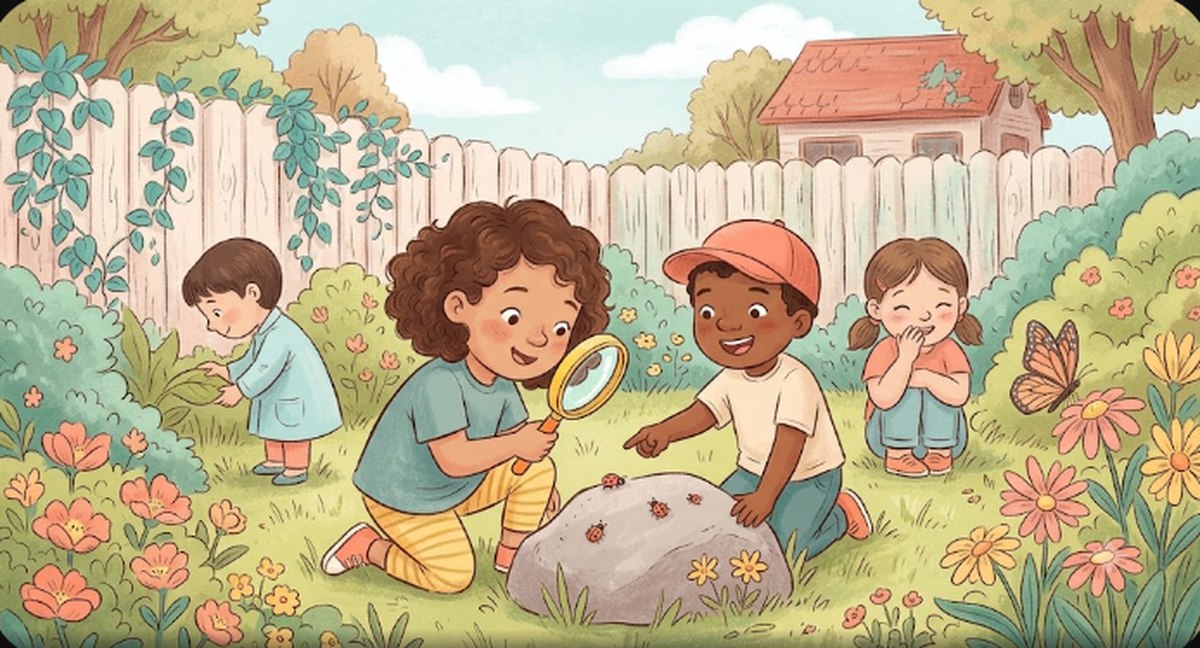

Bug hunting is one of the easiest outdoor activities to pull together on short notice — there’s no equipment to buy, the whole backyard becomes the activity, and kids get genuinely excited about finding something new under every rock and log. Here are 10 bug hunting and backyard insect activities that turn a normal afternoon outside into a mini nature investigation.
Grab a magnifying glass and a bug jar with airholes if you have them, but neither is strictly required — most of these activities work with just curious eyes and a willingness to get a little dirty.
Getting Started: Simple Bug Hunts
These first few activities need no prep and work anywhere there’s a patch of grass or dirt.
- Rock and Log Flipping: Gently flip over rocks, logs, or fallen leaves to find roly-polies, worms, and beetles hiding underneath — always flip carefully and place items back where they were.
- Ant Trail Following: Find an ant trail and follow it to see where the ants are heading and what they’re carrying back to the colony.
- Bug Scavenger Hunt: Make a simple checklist of common bugs (ladybug, ant, spider, worm, bee) and see how many kids can spot in 20 minutes.
- Nighttime Firefly Watch: On a warm evening, head outside at dusk to watch fireflies light up — a magical, zero-prep activity in the right season.
Bug Hunting Basics: Catch, Observe, and Release
Catching bugs briefly to look closer, then releasing them, teaches kids to observe without harming what they find.
- Bug Jar Observation: Use a clear jar with air holes to observe a bug up close for a few minutes before releasing it back where it was found.
- Butterfly and Bee Watching: Sit quietly near flowers and watch which bugs visit — a good activity for practicing patience and quiet observation.
- Spiderweb Spotting: Look for spiderwebs in the early morning when dew makes them easier to see, and observe from a safe distance without disturbing them.
Bring the Science In
These activities add a bit of learning to the hunt without making it feel like schoolwork.
- Build a Simple Bug Hotel: Stack sticks, pinecones, and hollow stems in a small pile or box to create a shelter that attracts beneficial insects over time.
- Bug Sketching Journal: Bring a notebook outside and have kids draw and label the bugs they find, building an ongoing backyard bug journal.
- Compare Bug Homes: Look for different types of bug homes in one yard — an anthill, a spiderweb, a beetle burrow — and talk about how each is built differently.
Free Printable Bug Hunt Checklist
To make your next backyard bug hunt easier to run, we made a free printable checklist featuring 10 common bugs to spot, with space to check off and sketch what kids find.
Bottom Line
Bug hunting activities cost nothing, need almost no setup, and work in nearly any backyard or park. Start with a simple rock-flipping session or a short scavenger hunt, then build up to a bug journal or a backyard bug hotel once kids are hooked on the hunt.
Bug hunting is also a simple way to build outdoor curiosity and observation skills. The American Academy of Pediatrics has written about why this kind of unstructured outdoor play matters for kids, see this AAP overview on the importance of play.
Related Reading
- 12 Fun Nature Walk Activities for Kids
- 20 Best Outdoor Scavenger Hunt Ideas for Kids
- 16 Fun Gardening Activities for Kids to Try This Season

About the Author: Family Hobby Hub
The Family Hobby Hub team researches and puts together simple, screen-free activity ideas for parents, grandparents, and caregivers — indoor play and sensory activities, backyard and outdoor games, on-the-go entertainment for car rides and waiting rooms, and easy learning and STEM activities for kids of different ages. Every guide is built around things most families already have around the house, takes only a few minutes to set up, and comes with a free printable checklist or activity sheet whenever possible. We are not child development specialists, educators, or licensed childcare professionals, and our activity ideas are general suggestions for family fun rather than professional guidance. Always supervise children during any activity and use your own judgment about what is appropriate for your child's age, interests, and abilities.