For more screen-free ways to fill an afternoon, see our boredom buster ideas for kids and our sensory play ideas for preschoolers.
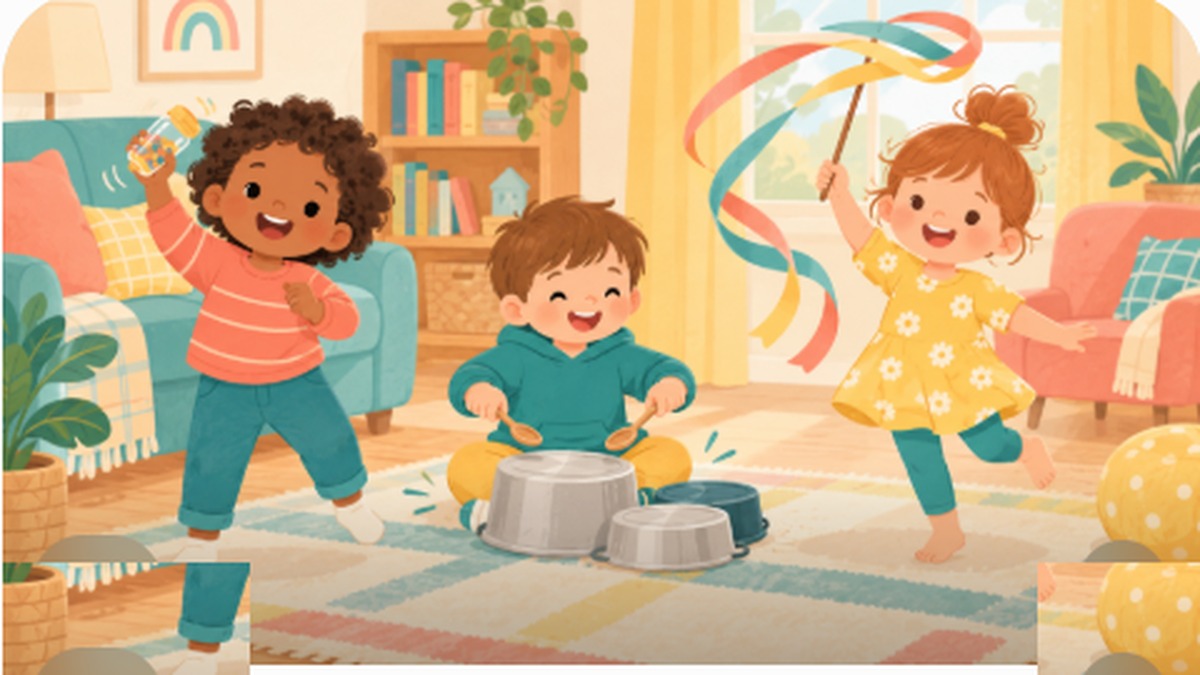
You don’t need an instrument in the house to get your kids moving and grooving. Below are 15 fun music and movement activities for kids, organized by type, plus a free printable activity tracker to log which ones your family tried and loved. These music and movement activities for kids use things you probably already have at home — pots, pans, scarves, and a phone or speaker for tunes.
Why Music and Movement Activities for Kids Matter
Music isn’t just entertainment — it’s one of the easiest ways to build early skills without a worksheet in sight. According to NAEYC, as children explore and enjoy music, “they can develop skills in math, literacy, and social studies.” Add movement to the mix and you’re also working on balance, coordination, and self-regulation — all while everyone’s having a good time. That’s why music and movement activities for kids are a staple in preschool classrooms, and they work just as well at home.
What You’ll Need
- A phone, tablet, or speaker for playing music
- Empty containers (plastic bottles, tins, or boxes) for homemade shakers
- Dry rice, beans, or pasta to fill shakers
- Pots, pans, and wooden spoons
- Scarves or ribbons (or an old scarf cut into strips)
- Large rubber bands and a sturdy box or tissue box
- A few drinking glasses and a spoon for water xylophone
- Open floor space to move
1. Rhythm & Instrument Play
These music and movement activities for kids turn household items into a full band. Great for building a sense of rhythm before formal music lessons ever start.
- Homemade Shaker Bottles — Fill small plastic bottles with rice or beans, seal tightly, and shake along to a favorite song.
- Pots-and-Pans Drum Circle — Line up pots and pans of different sizes and let kids experiment with pitch and volume using wooden spoons.
- Rhythm Clapping Games — Clap a simple pattern and have your child copy it back, then switch roles and let them lead.
- DIY Rubber Band Guitar — Stretch rubber bands of different thicknesses around an open box or tissue box and pluck to compare the sounds.
2. Dance & Movement Games
Movement games are some of the most requested music and movement activities for kids because they burn energy fast and always end in giggles.
- Freeze Dance — Play music and dance freely; when the music stops, everyone freezes in place until it starts again.
- Musical Chairs — The classic game works for toddlers too — just skip the “elimination” part and let everyone keep playing.
- Animal Movement Dance — Call out an animal (elephant, bunny, snake) and move like it does to the beat of the music.
- Ribbon Wand Dancing — Tie ribbons to the end of a stick or dowel and let kids swirl them through the air as they dance.
3. Singing & Listening Activities
Not every one of these music and movement activities for kids needs big movement — some of the best moments come from slowing down and just listening or singing together.
- Call-and-Response Singing Games — Sing a short line and have your child echo it back, building the phrase longer each round.
- Name That Tune — Hum the first few notes of a familiar song and see who can guess it first.
- Lullaby and Quiet-Time Singing — Use soft, slow songs to help wind down before naps or bedtime.
- Silly Song Freestyle — Take a familiar tune and make up brand-new, silly lyrics together.
4. Music-Themed Sensory & Quiet Play
These last three round out the list at 15 total music and movement activities for kids, blending sound with a bit of sensory exploration.
- Musical Scarves Sensory Play — Wave lightweight scarves through the air in time with slow versus fast music to feel the difference in tempo.
- Sound Scavenger Hunt — Sit quietly together and count how many different sounds you can hear around the house or yard.
- Water Glass Xylophone — Fill glasses with different amounts of water and tap gently with a spoon to hear the pitch change.
Free Printable: Music & Movement Activity Tracker
Grab our free printable tracker to check off each music and movement activity for kids as you try it, with space to jot down which ones were the family favorites.
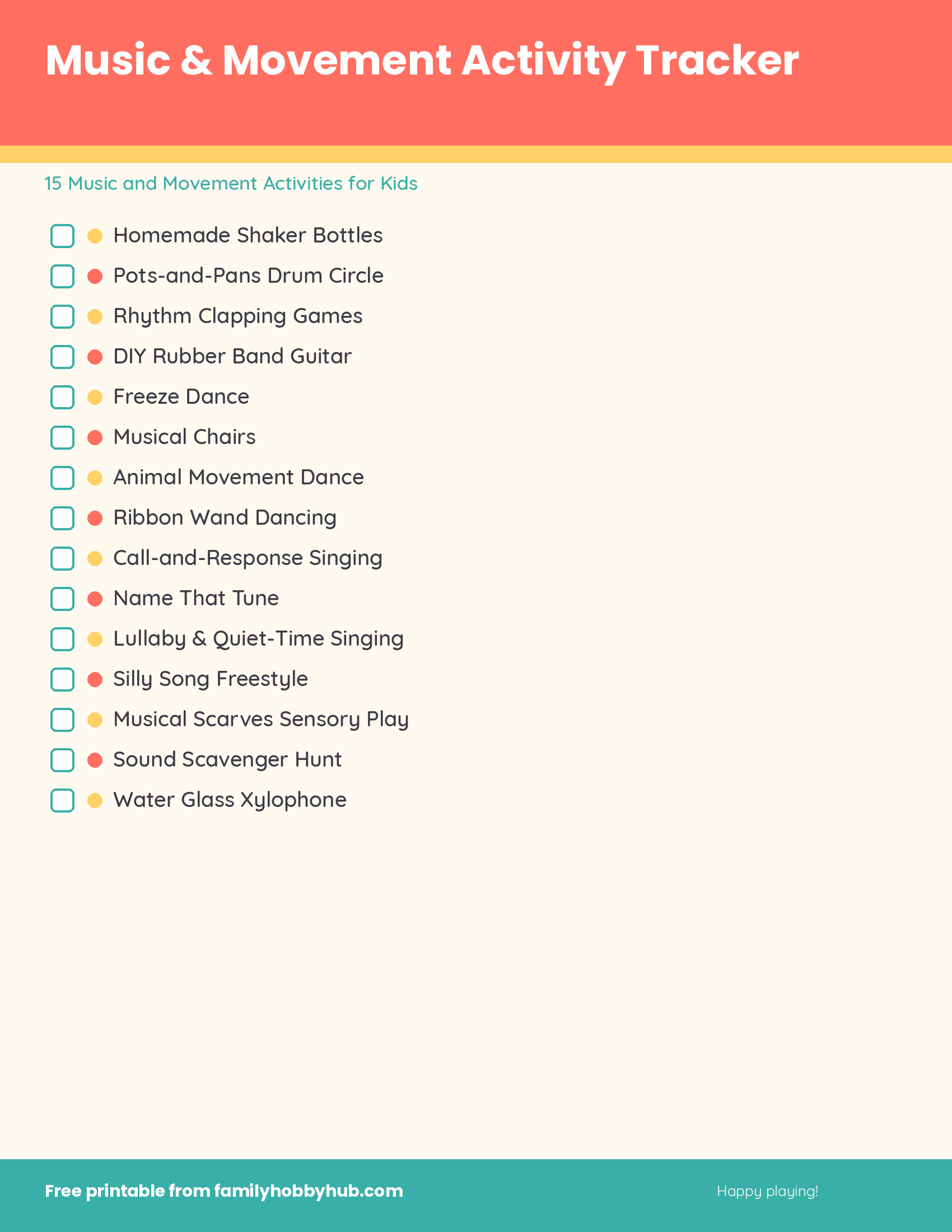
Download the free Music & Movement Activity Tracker (PDF)
Tips for Music and Movement Activities with Kids
- Let your child pick the music sometimes — ownership makes them more likely to fully join in.
- Keep sessions short for toddlers (5-10 minutes) and build up as attention spans grow.
- Mix fast and slow songs so kids practice controlling their bodies at different speeds, not just running wild.
- It’s okay to be off-key or off-beat — modeling that it’s fun, not a performance, matters more than doing it “right.”
Music and Movement Activities for Kids by Age
Toddlers do best with simple shaking, clapping, and Freeze Dance, since these music and movement activities for kids don’t require following complex directions. Preschoolers can handle call-and-response singing and basic instrument-making. Early elementary kids enjoy layering in creativity, like writing silly new lyrics or inventing their own dance moves to go with a song.
Turning Music and Movement Activities for Kids into a Daily Habit
A five-minute dance break before homework or after a long car ride can reset everyone’s mood. Many families keep a short rotation of music and movement activities for kids on hand for those in-between moments — right before dinner, right after nap, or as a way to signal “clean-up time” with a favorite song.
Common Mistakes with Music and Movement Activities for Kids
The biggest one is overplanning — trying to teach “correct” dance moves or musical technique too early. At this age, the goal of music and movement activities for kids is exploration and joy, not accuracy. Another common mistake is playing music too loud for very young children, which can turn an activity meant to be fun into something overwhelming.
Music and Movement Activities for Kids on a Budget
Nearly every idea on this list uses things already in the house. Homemade shakers cost nothing but a clean bottle and some dry rice, and a phone or tablet covers the music. These budget-friendly music and movement activities for kids prove you don’t need a music class membership to build real rhythm and coordination skills.
Music and Movement Activities for Kids for Siblings of Different Ages
Freeze Dance and Animal Movement Dance flex easily for mixed ages — older kids can add trickier animal moves or freeze poses while younger ones just enjoy the music and copy along. Let an older sibling “lead” a rhythm clapping pattern for a younger one to build in a helper role that keeps everyone engaged in the same music and movement activities for kids at once.
How to Store Supplies for Music and Movement Activities for Kids
Keep a small bin with homemade shakers, scarves, and ribbon wands ready to grab — when supplies are already assembled, these music and movement activities for kids are much more likely to happen on a whim rather than needing setup time.
Music and Movement Activities for Kids Without Buying Anything Special
If you’d rather not make shakers or wands at all, plenty of music and movement activities for kids need nothing but your voice and open floor space: call-and-response singing, Freeze Dance, Name That Tune, and Animal Movement Dance are all instrument-free.
Frequently Asked Questions
What age can kids start doing music and movement activities?
Babies as young as a few months old respond to music and gentle bouncing or swaying. Structured music and movement activities for kids, like Freeze Dance or shaker instruments, tend to work best starting around age 2.
Do I need any real instruments to do these activities?
No. Every activity on this list uses household items like pots, bottles filled with rice, or rubber bands stretched over a box — no real instruments are required.
How long should a music and movement session last?
For toddlers, 5-10 minutes is plenty. Preschoolers and older kids can often stay engaged for 15-20 minutes, especially if you rotate through two or three different activities.
What if my child doesn’t like loud music or noise?
Lean toward the quieter options on this list, like Water Glass Xylophone, Lullaby Singing, or a gentle Sound Scavenger Hunt, and let your child control the volume themselves whenever possible.
Final Thoughts
You don’t need a music degree or a shelf full of instruments to give your kids the real benefits of music — just a bit of open floor space, something to shake or bang on, and a willingness to be a little silly together. Try one of these 15 music and movement activities for kids this week and see which one becomes a family favorite.

About the Author: Family Hobby Hub
The Family Hobby Hub team researches and puts together simple, screen-free activity ideas for parents, grandparents, and caregivers — indoor play and sensory activities, backyard and outdoor games, on-the-go entertainment for car rides and waiting rooms, and easy learning and STEM activities for kids of different ages. Every guide is built around things most families already have around the house, takes only a few minutes to set up, and comes with a free printable checklist or activity sheet whenever possible. We are not child development specialists, educators, or licensed childcare professionals, and our activity ideas are general suggestions for family fun rather than professional guidance. Always supervise children during any activity and use your own judgment about what is appropriate for your child's age, interests, and abilities.